
Every personal injury case is a road to settlement. Here's exactly what yours will look like when you choose Weinstein Legal Team.
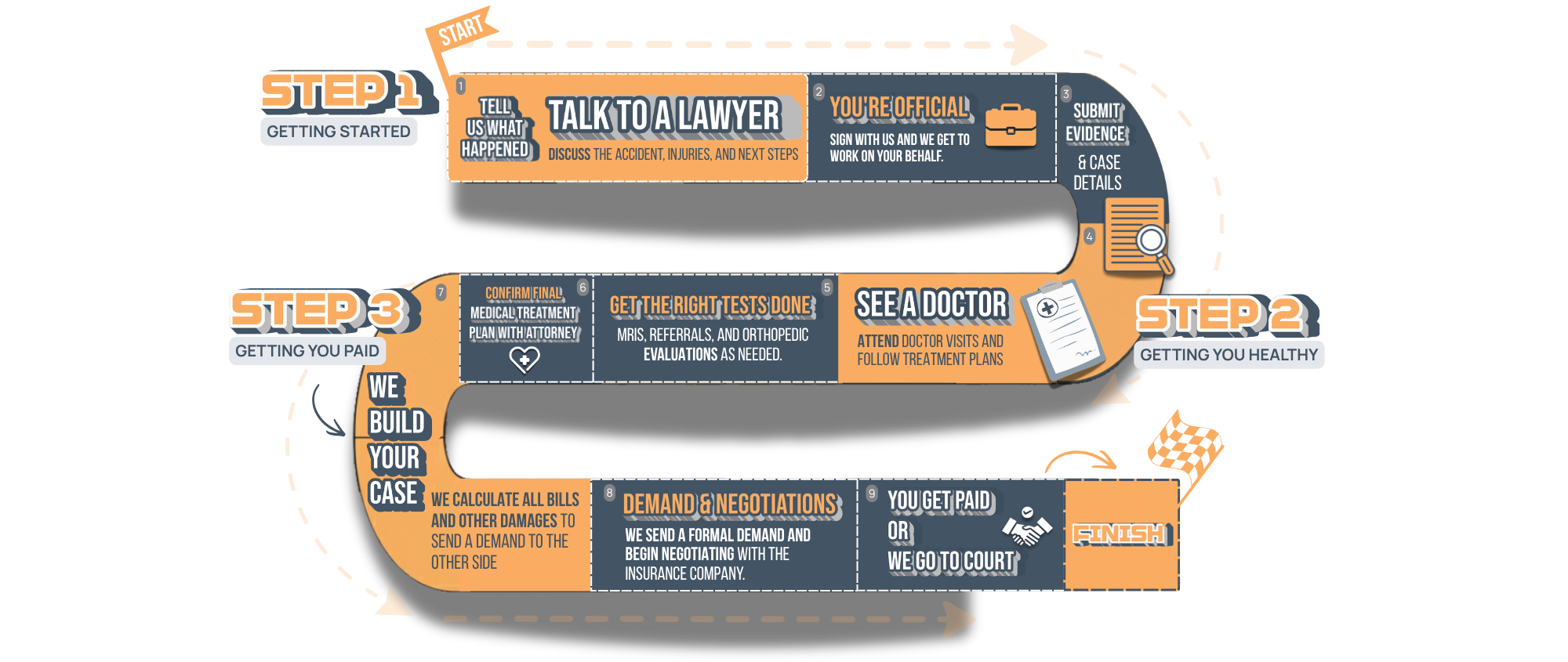
Whatever your case, we have you covered. Help starts here.
Don't see your situation? We handle every type of personal injury case →
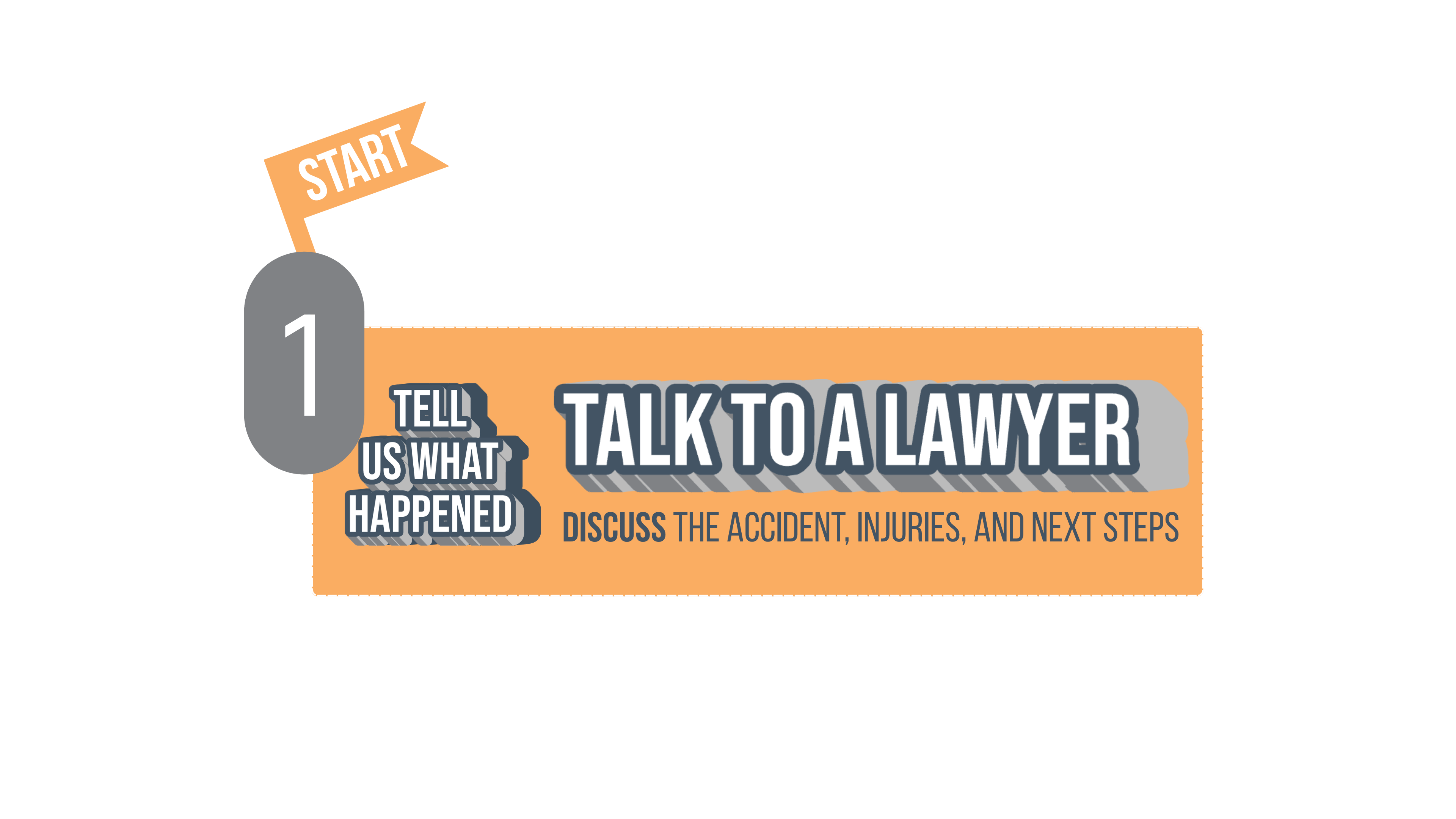
Tell us what happened. Discuss the accident, injuries, and next steps.

Sign with us and we get to work on your behalf.
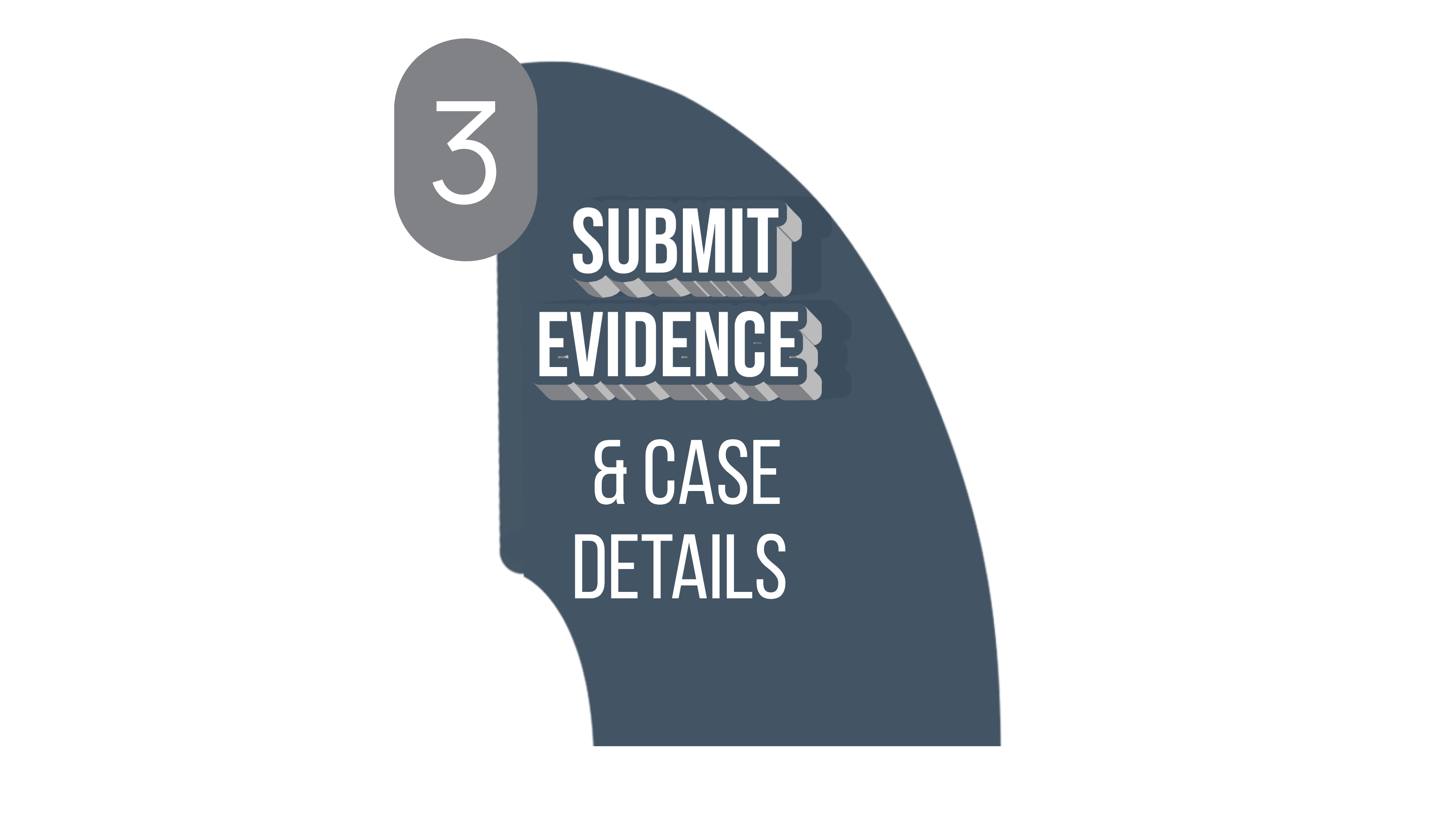
Share photos, police reports, medical records, and any documentation related to your case.

Attend doctor visits and follow treatment plans.

MRIs, referrals, and orthopedic evaluations as needed.
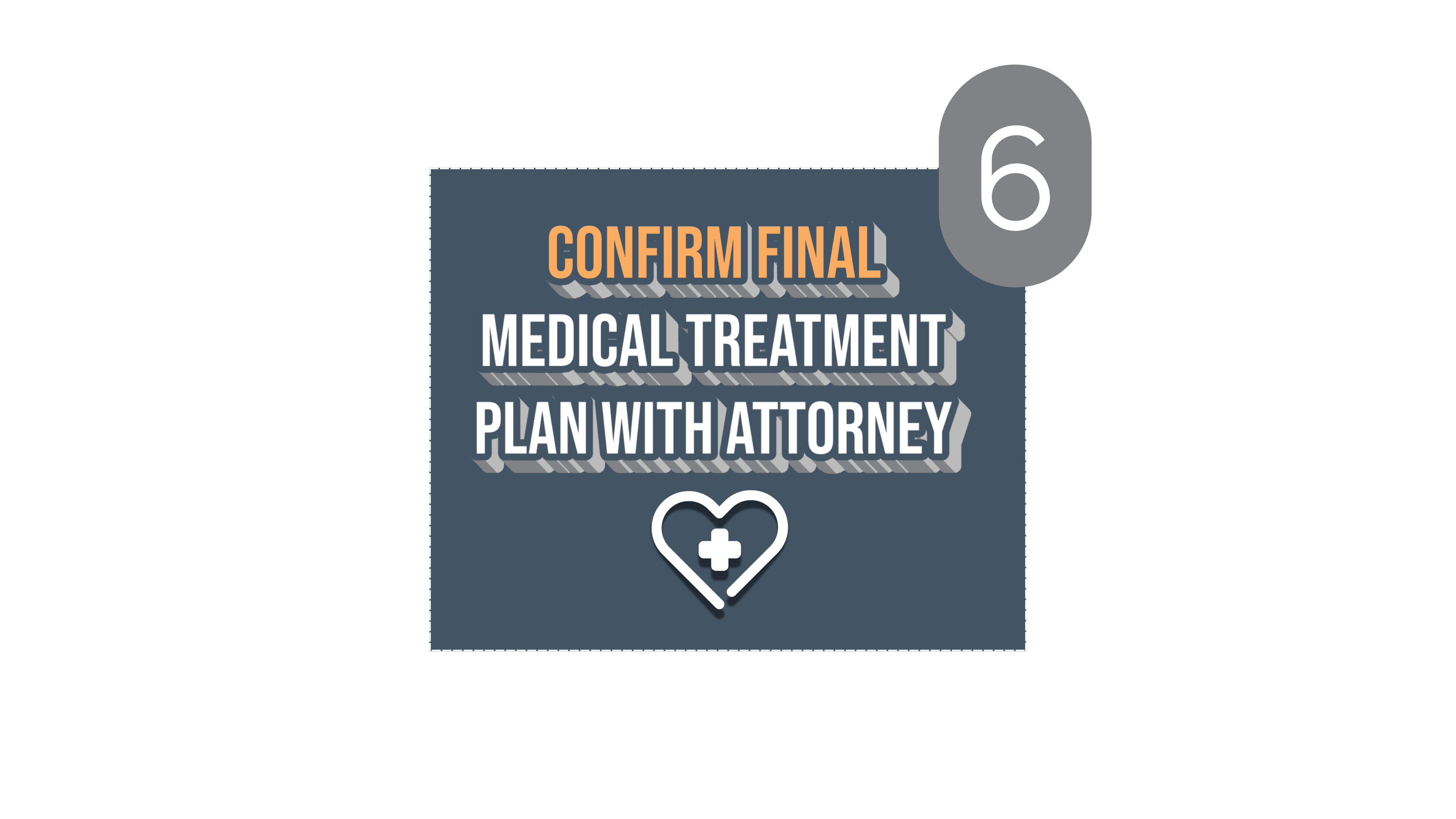
Confirm final medical treatment plan with attorney.
We calculate all bills and other damages to send a demand to the other side.

We send a formal demand and begin negotiating with the insurance company.
Your case reaches its conclusion. Either way, we don't stop until you get the compensation you deserve.
The most common questions we hear at Weinstein Legal Team, answered straight from each step of your road to settlement.
This first meeting is where we begin understanding what happened from your perspective, including how the accident occurred, your injuries and symptoms, and the medical care you have received so far. We also discuss your property damage, such as vehicle repairs, total loss concerns, rental coverage, and communication with the insurance carrier. If you have already spoken with an insurance adjuster, we will talk through those conversations as well.
No, we work on a contingency fee basis, which means there are no upfront legal fees. Our fee comes from a recovery, and only if we obtain a settlement or verdict on your behalf.
If you have documents such as photos, a crash report, discharge paperwork, or insurance letters, please have them handy for reference. Getting documents organized early helps create clarity now and prevents delays later in the process, since details that seem small can sometimes carry legal significance.
Once your agreement is signed, your case officially opens and we begin representing you. We deep dive into your case by looking at who is at fault, reviewing all available evidence, and considering the facts to confirm you have a case. We also notify the insurance companies, request policy information, and start gathering documents like crash reports, medical records, and billing summaries.
No. We immediately notify all insurance companies that we represent you, and adjusters are directed to communicate with us, not you. If a recorded statement is requested, we evaluate whether it is appropriate before anything proceeds.
From this point forward, you focus on your recovery and keep us informed about any changes in your condition. We handle all of the legal issues, and you will receive regular updates from your attorneys and case managers so you understand where your case stands.
We request things like the crash report, photos of the vehicles or scene, witness information, and any available video. We also collect documentation of lost wages if you missed work, and we request your medical records directly from your providers. If you have insurance letters, repair estimates, rental receipts, or any other accident-related documents, send those to us too.
You do not need to decide what is important. Send us everything related to the accident, and our team reviews and organizes all of it for you.
Gathering evidence early matters because the proof can disappear over time. Vehicles get repaired, video footage can be erased, and witnesses can become harder to reach, so collecting it now helps strengthen your case.
Yes, you should get medical treatment as soon as possible even if you felt okay. Adrenaline can mask pain, and some injuries do not show up right away, with symptoms developing hours or even days later.
In Florida, you have 14 days from the date of the accident to seek initial medical treatment in order to preserve certain insurance benefits. If you have not been evaluated yet, that should happen as soon as possible.
Consistent treatment matters because your attorney uses the medical notes as evidence, and insurance companies look closely at how quickly care began, whether there were gaps, and how symptoms progressed. Showing up consistently and being honest with your providers about improvements, setbacks, and limitations helps your records reflect the reality of your condition.
As your treatment progresses, your provider may recommend additional testing such as X-ray, MRI, CT scans, or nerve studies. These tests help confirm exactly what was injured, how severe it is, and whether your condition is improving as expected. Some injuries, like disc issues or nerve pain, are not visible from the outside, so imaging lets doctors see what is happening internally.
Yes, these evaluations and reports are extremely important for your case. Specialist evaluations provide professional medical opinions that strengthen your claim, and the imaging gives clear answers about what was injured and how serious it is.
No, we do not direct your medical care, which stays between you and your medical provider. Our role is to monitor developments and make sure your documentation stays complete and organized.
As your treatment progresses and your diagnostic testing is completed, your providers will evaluate your overall progress and outline final recommendations. These may include continued therapy, injections, a surgical consult, or long term pain management. At this stage, your doctors will answer which option is likely to resolve your pain, how much longer you need to treat, and whether you will still have any limitations.
Yes, it is important to attend all scheduled appointments during this phase. Insurance companies review treatment patterns closely, and gaps in your care can create questions that are easily avoided by staying consistent with your appointments.
A personal injury claim is not limited to bills you have already incurred. It must also include your future care recommendations and those future costs, so settling before your medical treatment is done can leave those future needs unaddressed.
Once you are close to finalizing treatment, we review your entire case again, including how the accident happened and who is legally responsible. We analyze your medical records in detail and calculate your damages so everything is complete and accurate before we move forward.
We calculate economic damages such as your medical expenses, bills, and lost wages. We also evaluate the broader impact of your injuries, including how they have affected your daily life, your ability to work, and your overall functioning.
This stage can take time because it is very important for everything to be complete and accurate. Nothing is assumed and nothing is rushed, and the careful preparation we do here directly influences how negotiations unfold later.
The demand is a detailed summary we send to the insurance company that lays out what happened, who is at fault, your injuries and medical care, and then formally demands money. That demand is supported by all the evidence and documentation we have gathered throughout your case.
We usually give the insurance company at least two weeks to respond. After that, they review the file and may make an initial offer, request clarification or additional records, or dispute parts of the claim. Negotiation is typically a process, not a single conversation.
No. When an offer comes in, we review it carefully and discuss it with you, giving our honest opinion on whether it is a good or bad offer based on what happened to you. You are never pressured into a decision, and if we cannot reach a fair resolution, the next consideration is litigation, which means filing your lawsuit.
Before anything is finalized, we sit down and review the terms with you carefully so you understand every component. We walk through how your medical bills are paid, any remaining balances, the case costs, and our fees, and we stay transparent about the numbers right through the end of your case.
If the insurance company does not make a fair offer, we may need to file a lawsuit and move your case into the court system. Most cases do not require filing a lawsuit, but we prepare every case with that possibility in mind.
Litigation adds steps where you will be involved in certain parts, such as filling out written discovery, sitting for a deposition, attending a mediation, and potentially a trial. Whether your case resolves through settlement or litigation, one of our attorneys guides you step by step.
Still have questions? Call (954) 845-0505 or start a free case review.
Your path to justice begins with a single call. Let Weinstein Legal Team fight for you.
Start Your Free Case Review
Video coming soon